



























PHYSICA LAB
What if a physics lab could tell the story of the people who learned, laughed, experimented, and grew inside it? That’s what we, the batch of 2027, wanted to create. From a ceiling that takes you through the solar system to a wall tracing 400 years of physics discoveries, every corner has a story. We’ve added playful caricatures of lab tools, a mascot inspired by our dear Nilesh Sir, and a working wind tunnel that brings aerodynamics to life. A QR code connects it all to our legacy, something we hope future batches will remember, explore, and build upon.
How Thin is 0.1 mm?
Ever wondered how scientists measure something too small to measure accurately with a ruler? That’s where the Vernier caliper comes in! In this video, we take a closer look at this handy instrument, how to use it, how to spot and correct zero error, and where it can actually be useful. From measuring diameters to depths, see how this simple tool makes surprisingly precise measurements possible.

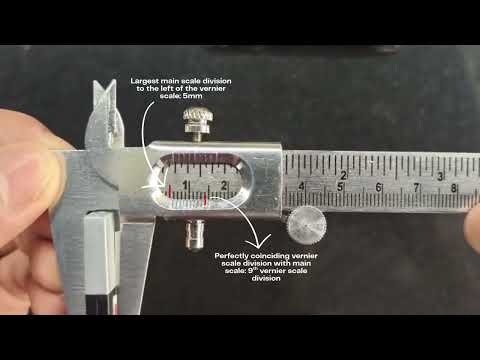

Measuring the Thickness of a Pencil Lead
Ever wondered how you can measure something thinner than a millimetre with confidence? Meet the micrometer screw gauge, a small instrument built for big precision! In this video, get familiar with its different parts, learn how to use it correctly, understand what zero error means, and see how the final length is calculated. It’s simple, precise, and much more interesting once you know what each part actually does.
The Power of Electrons
Ever wondered how a few simple pieces can come together to make electricity do something useful? From controlling current to creating a complete working circuit, each component has a role to play. In this video, explore different circuit components, what they do, how they work together, and how we represent them using circuit symbols. By the end, you’ll see circuits not just as diagrams, but as a language of electricity.


Unconventional Physics Phenomenon
Have you ever seen water flow so smoothly that it almost looks frozen? That’s the fascinating idea behind illusory laminar flow. In this video, we explore what laminar flow is, the simple principle behind it, and why it happens. It’s a great example of how something that looks almost impossible can actually be explained by physics. Watch closely, you might never look at flowing water the same way again!
Liquid Water at -5°C
What if a liquid could stay completely calm and suddenly turn into crystals right before your eyes? This video explores the fascinating idea of an instant crystallization point, from what it means to the strange supercooled state, to the tiny moment when nucleation begins. See what happens when this carefully balanced state is suddenly triggered, and watch an ordinary-looking liquid transform into something completely unexpected in seconds.

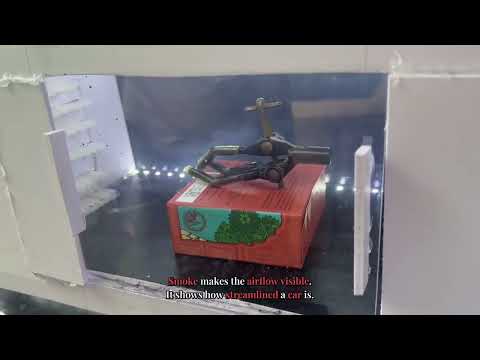
Simulation of Aerodynamics
Ever wondered how we know whether a car, plane, or any moving object can cut smoothly through the air? That’s where a wind tunnel comes in! In this video, we take a look at what wind tunnels do, how they help streamline objects, and how they work. Even better, our school has a small working model! See how this fascinating setup brings the invisible movement of air to life.
Flame Suction
Can a simple piece of tissue defy gravity? It might look like magic, but there’s some fascinating physics hiding behind it! In this video, we explore how pressure can keep a wooden plank from falling and how the behaviour of gases makes this surprising trick possible. It’s a simple experiment with an unexpected result, proof that sometimes, the most ordinary things around us can create the most interesting physics.